Every successful business stands on a foundation of smart, timely, and strategic decisions. From choosing the right market to investing in innovation, each decision shapes a company’s path toward growth. In today’s fast-paced world, hesitation can cost opportunities, while confident choices can drive progress. Strong decision-making doesn’t just solve problems; it fuels direction, empowers teams, and keeps businesses adaptable amid constant change. Exploring why decision-making is important for business reveals how leaders can boost growth, reduce risks, and stay competitive..
In this article, you’ll learn how effective decision-making drives business growth, what factors influence great choices, and how to improve your decision-making skills for better results every day.
Understanding Business Decision-Making
Business decision-making means selecting the best actions to reach goals, solve problems, and drive growth. To truly understand what is the purpose of a decision, it’s about guiding a company’s direction; each choice shapes how it moves forward and adapts to change.
Levels of Business Decision-Making
- Strategic Level: Leaders focus on long-term goals, such as entering new markets, developing products, or expanding operations.
- Tactical Level: Managers turn strategies into actionable plans that guide departments and projects.
- Operational Level: Teams make daily decisions that ensure smooth workflows, customer satisfaction, and consistent performance.
Types of Business Decisions:
- Routine Decisions: Handle everyday tasks and maintain efficiency.
- Strategic Decisions: Shape the company’s direction and long-term success.
- Crisis Decisions: Require fast thinking and clear judgment during unexpected challenges.
Each decision, no matter how small or large, influences performance, stability, and future growth. Effective decision-making helps businesses stay focused, flexible, and resilient in an ever-changing environment.
Why Decision-Making Is Important in Business
Every thriving company stands on the strength of its decisions. But what truly makes decision-making so vital in business? Focusing on what are the five importances of decision-making helps reveal how each choice shapes direction, drives efficiency, and fuels growth. When leaders decide with clarity and purpose, they create a path that connects vision with action.
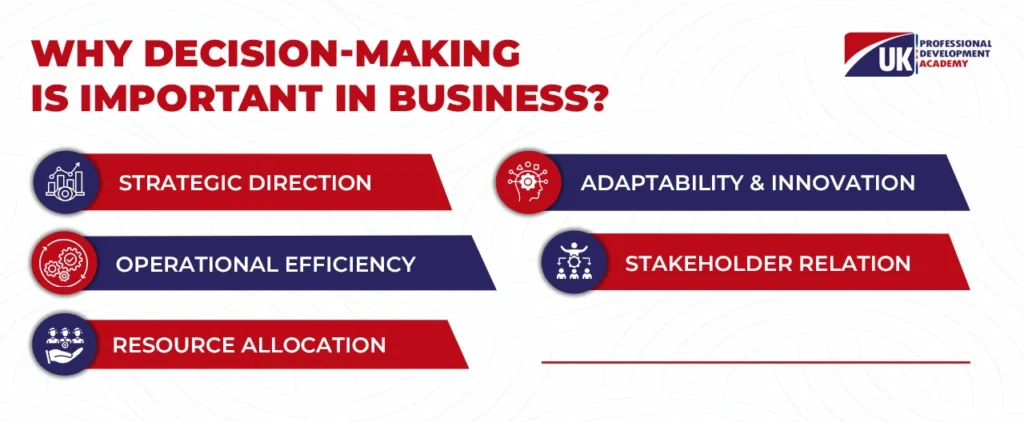
- Strategic Direction
Strong decision-making sets the course for the future. It helps leaders define long-term goals, identify opportunities, and choose the right markets to pursue. Without clear decisions, strategies lose focus and teams lose alignment. Wise choices turn vision into progress.
- Operational Efficiency
Daily operations depend on consistent, well-thought-out decisions. Whether it’s managing schedules, resolving issues, or improving workflows, every action impacts productivity. When decisions flow smoothly, teams perform better, and businesses run with greater precision.
- Resource Allocation
How can a company grow without managing its resources wisely? Decision-making determines where time, talent, and money go. Effective choices ensure the right people handle the right tasks and that investments deliver real value. Balanced decisions protect stability and encourage growth.
- Adaptability and Innovation
Markets shift, trends evolve, and challenges appear without warning. In such moments, what is the main benefit of effective decision-making becomes clear: it enables businesses to stay adaptable, foster innovation, and maintain a competitive edge. When leaders embrace change through thoughtful choices, they transform uncertainty into opportunity.
- Stakeholder Relation
The decision-making process, especially when it considers the interests of employees, customers, and investors, builds stronger relationships and greater satisfaction among stakeholders.
In every part of business, from planning to execution, decision-making keeps everything moving forward. It connects people, purpose, and performance. These 5 importance of decision-making reflect how the right choices shape success, adaptability, and long-term stability.
The Role of Decision-Making in Business Success
Business success depends on strong decisions that move the company forward. Every choice, big or small, shapes profits, growth, and customer loyalty. At its core, what is the purpose of a business decision comes down to creating actions that drive progress, solve challenges, and keep the organisation moving toward its goals.
How Good Decisions Drive Success
- Boost Profits: Smart pricing, cost control, and investment decisions increase revenue and keep the company financially strong.
- Fuel Growth: Clear strategic choices open new markets, attract investors, and expand brand presence.
- Enhance Customer Satisfaction: Decisions focused on quality, service, and innovation build trust and long-term loyalty.
- Strengthen Teams: When leaders decide with clarity, employees feel confident, motivated, and aligned with the company’s goals.
Real-World Examples:
- Apple: Choose innovation over imitation, turning technology into an experience customers love.
- Netflix: Shifted from DVDs to streaming at the right time, transforming global entertainment.
When Decisions Go Wrong
- Ignoring customer needs weakens trust.
- Delaying innovation limits growth.
- Investing without a strategy leads to loss.
Every decision sets the tone for success or failure. When leaders act with insight, courage, and purpose, they create lasting results and keep the business thriving.
How to Improve Decision-Making Skills in Business
Strong decisions don’t happen overnight; they grow through experience, reflection, and the right approach. In the world of commerce, understanding what is decision-making in business means recognising how every choice influences growth, direction, and success. So, how can leaders sharpen their decision-making skills and guide their businesses toward smarter outcomes?
- Use Data-Driven Approaches
Why rely on guesswork when data can reveal the truth? Analysing market trends, performance metrics, and customer behaviour helps leaders see the bigger picture. When choices rest on solid information, confidence naturally follows. Some business decision-making examples include using customer analytics to refine marketing strategies or assessing sales data before launching a new product.
- Encourage Open Communication
Significant decisions often come from great conversations. When leaders invite honest input from teams, they uncover diverse perspectives that spark better ideas. Open dialogue builds trust and ensures every voice adds value to the final choice.
- Implement Decision-Making Frameworks
Structure turns complexity into clarity. Tools like SWOT analysis, cost-benefit evaluations, and decision trees help leaders weigh options objectively. Frameworks guide thinking, reduce bias, and keep decisions aligned with long-term goals.
- Learn From Both Successes and Failures
Every outcome, good or bad, teaches something helpful. Reflecting on what worked and what didn’t strengthens future judgment. Growth happens when leaders stay curious and view every result as a learning opportunity.
- Develop Leadership Training Programs
How do strong decision-makers stay sharp? Continuous learning. Training programs build confidence, emotional intelligence, and problem-solving skills that elevate the entire organisation. When leaders grow, so does the business.
Improving decision-making is an ongoing journey. With the right mindset, open collaboration, and steady learning, leaders can turn every choice into a step toward lasting success.
Conclusion
Decision-making drives every step of a business. Each choice shapes goals, growth, and the ability to handle change. When leaders act with clarity and purpose, they turn challenges into opportunities and plans into progress. Strong decisions keep teams confident, operations smooth, and customers satisfied. They help businesses stay focused and ready for the future. In simple terms, understanding why decision-making is important in business means realising that every choice matters. Clear, thoughtful decisions create the path to steady growth and lasting success.