What truly shapes how teams achieve success and meet business goals? Every plan, decision, and action follows management principles to ensure smooth operations. In management, these principles guide how you set goals, lead people, and make informed decisions. When you understand and apply effective management, you run teams with confidence, clarity, and purpose.
In this article, you will explore seven key principles of effective management. In the end, you will understand how to lead with clarity, inspire your team, and achieve lasting results.
What is effective management in business?
Effective management helps businesses reach their goals. Managers use people and resources in the right way. They plan work, organise tasks, lead teams, and control daily actions. Good managers guide people, fix problems, and deliver results. They also build trust, support growth, and give clear direction, helping you lead with confidence. Because of this, effective management improves performance and long-term success.
Today, businesses face strong competition every day. Markets change quickly, and teams feel constant pressure. For this reason, managers must act with focus and confidence. They must also lead with a clear purpose. Strong management turns challenges into opportunities and motivates teams to achieve their best.
7 Key Principles of Effective Management
Effective management supports strong team performance and business success. Therefore, exploring the principles of effective management helps you lead better, achieve goals, and motivate your teams.
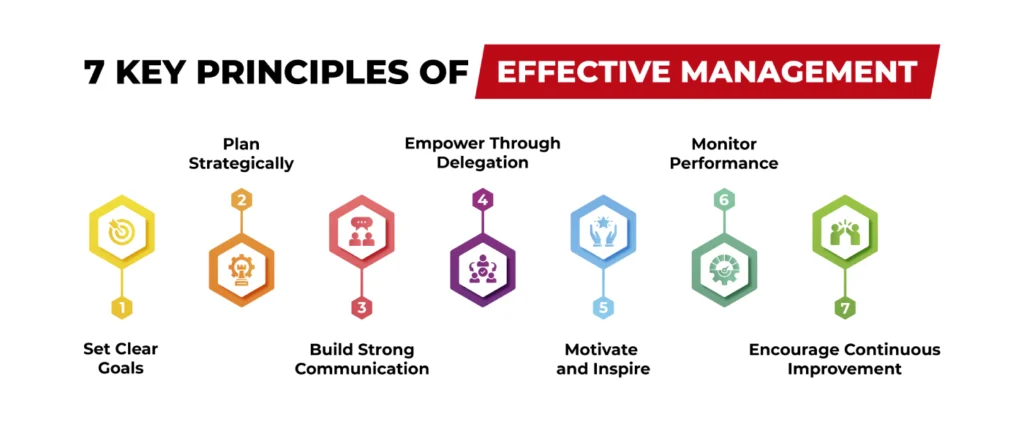
- Set Clear Goals
Clear goals give your team direction and purpose. Managers set short-term and long-term goals that match business needs. When your goals stay clear, your employees know what matters most each day. Goals help teams track progress, make better choices, and stay focused. When you share and review goals often, you keep everyone aligned, confident, and motivated.
- Plan Strategically
Managers plan with care to use resources well. Strategic planning begins with clear thinking. You spot risks early and find new chances in time. Then, you set clear priorities that support your business goals. Strong plans cut confusion and save effort. Planning prepares your team for future challenges. It also helps you react fast to market changes. When you plan well, you lead your team with confidence.
- Build Strong Communication
Clear communication makes management more effective. You share information in simple words and explain tasks and goals clearly. This shows the importance of effective management, as it builds trust and reduces mistakes. Listen to your team, ask for questions, and welcome feedback. Clear communication helps you lead your team with clarity and confidence.
- Empower Through Delegation
Delegation helps you focus on important tasks while helping your team grow. Assign work based on your team’s strengths and skills. Showing trust makes employees feel more responsible for their work. Give clear instructions and support, but avoid micromanaging. Guide your team and check progress regularly. Delegation also boosts productivity, builds skills, and prepares your team for future leadership roles.
- Motivate and Inspire
Motivation drives your team’s performance and commitment. You should recognise effort and celebrate even small successes. Leading by example is one of the 7 effective management techniques, as your attitude shapes the team’s culture. Support personal growth with training, feedback, and encouragement. When you inspire your team, they stay engaged, perform better, and remain loyal to your organisation.
- Monitor Performance
Performance monitoring keeps your team on track. Set clear standards and expectations from the start. Review progress often using simple measures. Feedback plays an important role. Give it quickly and respectfully. Focus on helping your team improve, not on blaming anyone. Monitoring also helps spot problems early. This lets you correct issues fast. As a result, teams deliver better results and maintain high quality.
- Encourage Continuous Improvement
What is the 7th principle? The 7th principle of effective management is continuous improvement. This principle focuses on learning, growth, and ongoing development. Encourage your team to learn new skills and share ideas. Review processes often, as small changes can bring strong results. Learn from mistakes and successes equally. When you support improvement, your organisation becomes stronger every day.
Final Thoughts
Effective management shapes business success. It combines clear goals, strong planning, and open communication. Management also relies on delegation, motivation, and performance tracking. Following these principles of effective management, you will lead with purpose and clarity. Enhance your skills with Business Management courses at the UK Professional Development Academy. Learn practical tools, boost leadership, and advance your career.